
Table of Contents
- Why House Made Sauces Taste Better Than Anything From a Jar
- How to Make Sauce Taste Richer Without Adding Cream
- How to Balance Flavours in a Sauce: Salt, Acid, Fat, Heat
- How Long to Simmer Tomato Sauce for Deep, Layered Flavour
- Homemade Sauce Versus Shop-Bought Sauce: What Actually Changes
- Why Fresh Ingredients Make House Made Sauces Taste Different
- Conclusion: The Case for House Made Sauces
- Frequently Asked Questions
Last Updated: 13 October 2026
Why House Made Sauces Taste Better Than Anything From a Jar
Walk into any great kitchen and you will find a pot of sauce simmering on the stove. That is not an accident. House made sauces taste better because they are built from fresh ingredients, balanced by hand, and served at their peak rather than sitting in a jar for months.
At Hungry Papa, we make our sauces in-house every day. It is one of the reasons our charcoal-grilled dishes carry a depth you cannot fake. Below, we break down exactly why fresh sauce wins, and how you can taste the difference yourself.
Jarred sauces are made for shelf life. That means preservatives, added sugar, and heat treatments that flatten flavour. A sauce made today has none of those compromises.
The gap between house made sauces and shop-bought ones is not just freshness. It is the freedom to adjust salt, acid, fat and heat right up to the moment you serve.
How to Make Sauce Taste Richer Without Adding Cream
The answer is reduction and umami, not dairy. Simmering a sauce uncovered lets water evaporate and concentrates everything left behind. That is how you build richness without a drop of cream.
Try these methods:
- Reduce stock or wine slowly to concentrate natural sugars
- Add a spoon of tomato purée and cook it out until it darkens
- Finish with a knob of butter or a drizzle of good olive oil
- Use a splash of soy or fish sauce for savoury depth
- Let roasted vegetables or bones simmer into the base
Each of these adds body. None of them masks the flavour underneath.
A common mistake is reaching for cream too early. Cream softens sharp edges, but it also dulls the bright notes you worked to build. Save it for when you actually want a creamy sauce.
How to Balance Flavours in a Sauce: Salt, Acid, Fat, Heat
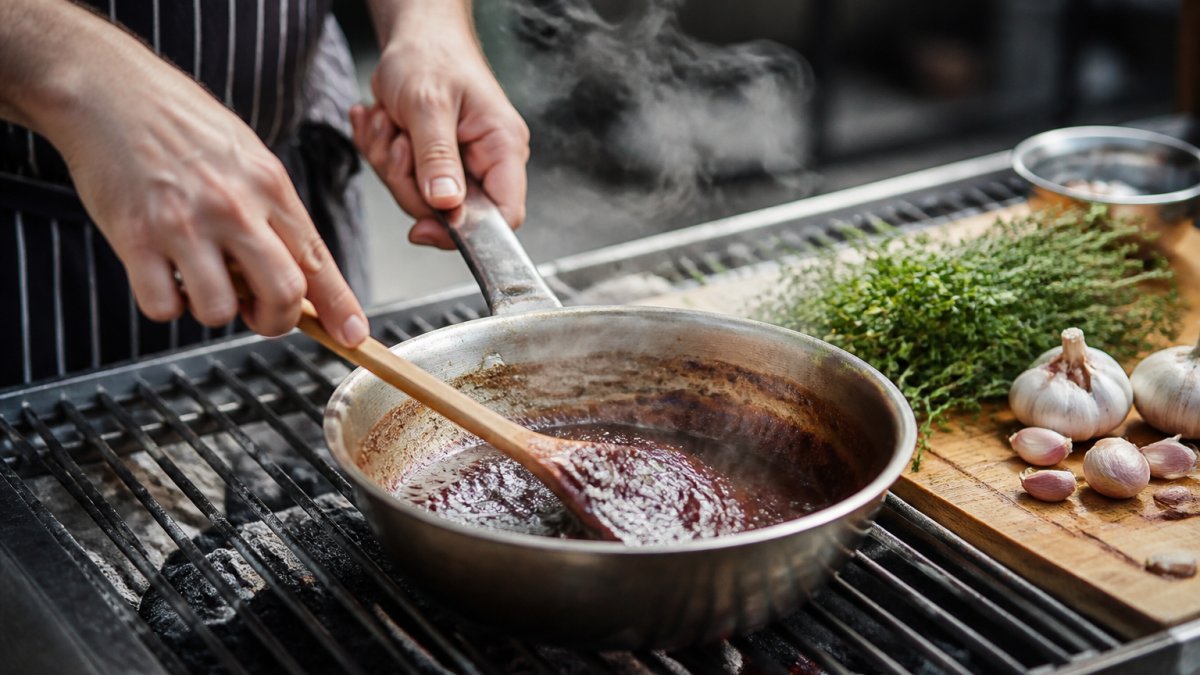
Balancing a sauce means adjusting four things: salt, acid, fat and heat. Get those right and almost any sauce tastes complete. Miss one and it will feel flat, sharp, or heavy.
Here is how each one works:
- Salt wakes up every other flavour. Add a pinch, taste, repeat.
- Acid (lemon, vinegar) cuts through richness and brightens the whole dish.
- Fat carries flavour and gives a smooth, coating texture.
- Heat adds warmth and keeps you coming back for another bite.
The trick is tasting as you go. Add one element at a time and stir well before the next. Small adjustments beat big corrections.
If a sauce tastes flat, it usually needs acid, not more salt. A squeeze of lemon often fixes what another pinch cannot.
How Long to Simmer Tomato Sauce for Deep, Layered Flavour
Simmer a tomato sauce for at least 45 minutes for a noticeable depth, and up to two hours for a slow, layered result. The longer it cooks, the more the flavours marry and the sweeter the tomatoes become.
But time alone is not the goal. What matters is what happens during that time:
- Water evaporates, so the sauce thickens naturally
- Acids mellow and sweetness comes forward
- Herbs and garlic infuse the whole pot
Stir every so often and keep the heat low. A hard boil splatters and can scorch the bottom, which turns the whole batch bitter.
For a quicker sauce, use crushed tomatoes and simmer for 20 to 30 minutes. It will still beat anything from a jar.
Homemade Sauce Versus Shop-Bought Sauce: What Actually Changes
The main difference between homemade sauce and shop-bought sauce comes down to three things: ingredients, sugar, and time. Shop-bought sauces are engineered to survive months on a shelf. Homemade sauce is made to taste good right now.
| Factor | House Made Sauce | Shop-Bought Sauce |
|---|---|---|
| Ingredients | Fresh, whole, seasonal | Preservatives and stabilisers |
| Sugar | Added only to balance | Often added for shelf life |
| Texture | Adjusted by hand | Fixed by recipe |
| Flavour | Layered and bright | Flat and uniform |
| Freshness | Made today | Made months ago |
That table tells the story. Mass-produced sauces are consistent, and consistency has value. But consistency is not the same as depth.
When you make a sauce yourself, you decide how it tastes. You can push the garlic, pull back the sugar, or add chilli to your own taste.
Why Fresh Ingredients Make House Made Sauces Taste Different
Fresh ingredients carry more aroma, and aroma is most of what you taste. A garlic clove crushed today releases oils that a jarred paste lost long ago. The same goes for herbs, citrus, and ripe tomatoes.
Consider what changes when you start fresh:
- Herbs keep their oils instead of drying out
- Garlic and onion taste sharper and sweeter
- Tomatoes hold natural sweetness that processing removes
- Acid from real lemon tastes clean, not chemical
This is why house made sauces taste different even when the recipe looks the same on paper. The ingredients do the heavy lifting.
At Hungry Papa, our tzatziki and pitta are prepared fresh in-house, and it shows in every bite. Customers notice. As one regular put it, the ingredients “felt high quality” in every dish.
Do not judge a sauce by its recipe alone. Two cooks can follow the same steps and get different results, because freshness and balance matter more than the list of ingredients.
Conclusion: The Case for House Made Sauces
Making sauce from scratch takes time, and time is the one thing a jar cannot give you. But that time is exactly what builds flavour, layer by layer, taste by taste.
If you would rather leave it to the experts, that is what we are here for. Hungry Papa blends Greek tradition with bold Asian street flavours, and every sauce is made in-house to match our charcoal-grilled dishes. We offer dine-in, takeaway, and catering, so you can enjoy the same quality wherever you are.
Book a table with Hungry Papa and taste what a house made sauce is supposed to be.
Frequently Asked Questions
Why do house made sauces taste better than shop-bought sauces?
House made sauces taste better because they use fresh ingredients, are seasoned to order, and are built in layers. Shop-bought sauces are made to survive months on a shelf, so they rely on preservatives, stabilisers, and high heat processing that flattens flavour. When you make sauce fresh, you control the balance of salt, acid, fat, and heat at every stage. You also avoid the cooked-down, uniform taste that comes from mass production. The difference is most obvious in tomato-based sauces, where fresh garlic and proper simmering create depth that jarred versions cannot match.
How do chefs balance flavours in a sauce?
Chefs balance flavours by tasting constantly and adjusting four elements: salt, acid, fat, and heat. Salt wakes up other flavours, acid (lemon juice, vinegar) cuts through richness, fat adds body and carries aroma, and heat provides background warmth. If a sauce tastes flat, add acid first. If it tastes sharp, add a small amount of fat or sugar. The key is adding in small increments and tasting after each addition. House made sauces give you this control because you are building them from scratch, not trying to fix a finished product.
How long should I simmer tomato sauce for the best flavour?
Simmer tomato sauce for at least 30 to 45 minutes for a basic sauce, and up to 2 hours for a deeper, richer result. The longer simmer breaks down tomato cell walls, concentrates natural sugars, and lets flavours meld. A 30-minute simmer works for a quick weeknight sauce. A 90-minute to 2-hour simmer develops the kind of depth you taste in restaurant sauces. Keep the heat low, stir occasionally, and add a splash of water if it thickens too much. The sauce should bubble gently, not boil hard.
What is the difference between homemade and commercially made sauce?
Commercially made sauces are designed for shelf stability, consistent colour, and long transport life. They often contain added sugars, thickeners, and preservatives. Homemade sauces use fresh ingredients, have no need for preservatives, and can be adjusted to your taste. The trade-off is time and perishability. A house made sauce might last a week in the fridge, while a jarred sauce lasts months. But the flavour difference is significant: homemade sauce tastes brighter, fresher, and more layered because the ingredients have not been cooked to death during processing.