Table of Contents
- Why Charcoal Grilled Food Benefits for Flavor Start at the Fire
- How Charcoal Grilling Adds Smoky Flavour
- Charcoal vs Gas Grill Flavour: What Actually Changes
- The Charcoal Itself Changes the Taste
- Best Foods to Cook on a Charcoal Grill
- How to Get More Flavour from Charcoal Grilling
- When Charcoal Goes Wrong: Bitter, Acrid and Ashy
- Conclusion
- Frequently Asked Questions
Last Updated: October 17, 2026
Why Charcoal Grilled Food Benefits for Flavor Start at the Fire
Charcoal grilled food benefits for flavor because burning charcoal releases aromatic compounds that settle into meat, vegetables and seafood as they cook. That smoke is the difference between a sausage that tastes like a sausage and one that tastes like a Saturday afternoon.
This guide from Hungry Papa covers why that happens, which charcoal to buy, and how to get more smoke into every bite. We grill over charcoal daily, and the lesson we keep relearning is simple: the fire does most of the work, so get the fire right.
But first, here’s what most guides get wrong. They treat charcoal as a heat source and flavour as something you add later with a rub or sauce. It’s the other way round.
Charcoal grilling is the method of cooking food over burning carbon-rich fuel, where the fuel itself releases smoke compounds that season the food during cooking. The fuel is the ingredient.
Below, we’ll show you exactly how to choose charcoal, control the fire, and avoid the bitter mistakes that ruin a good cook.
How Charcoal Grilling Adds Smoky Flavour
Smoke does two jobs at once. It coats the surface, and it sinks in.
When charcoal burns, it releases tiny particles and gases. These land on the food and settle into the crust. That’s the surface job, and it’s why grilled food looks darker at the edges.
The deeper job is chemistry. Smoke carries compounds called phenols and guaiacols, which dissolve into fat and moisture on the food’s surface. They keep moving inward as the food heats. This is why a slow-cooked piece of lamb tastes smoky all the way through, not just on the outside.
Three things control how much smoke you get:
- Fat and drippings: fat hitting hot coals creates new smoke, so fattier cuts take on more flavour
- Lid position: a closed lid traps smoke around the food instead of letting it drift away
- Charcoal load: more lit charcoal means more smoke, up to a point
Keep a small spray bottle of water nearby. A light spritz on flare-ups controls the fire without dumping ash onto your food, and the steam carries extra smoke flavour upward.
Charcoal vs Gas Grill Flavour: What Actually Changes
Charcoal wins on flavour, and the reason is simple. Gas burns clean. Charcoal doesn’t, and that’s the point.
A gas grill heats food with a flame that produces almost no smoke. It’s fast, tidy and easy to control. What it can’t do is season your food with combustion by-products, because there aren’t any worth speaking of.
Charcoal produces visible smoke and aromatic gases from the moment it lights. Those gases land on the food. That’s the flavour gap in one sentence.
| Factor | Charcoal Grill | Gas Grill |
|---|---|---|
| Smoke flavour | Strong, built in | Minimal, needs chips or a smoker box |
| Heat control | Slower, manual | Instant, precise |
| Setup time | 20-30 minutes to ash-over coals | A few minutes |
| Best for | Depth of flavour, feeding a crowd | Weeknight speed |
Where Gas Wins
Gas is better for a quick Tuesday dinner. It’s ready in minutes, holds a steady temperature, and doesn’t leave you with a bag of half-burnt coals.
If speed and control matter more than smoke, gas is the sensible pick. Just don’t expect it to taste like charcoal. No accessory fully closes that gap.
The Charcoal Itself Changes the Taste
Not all charcoal tastes the same. The fuel you choose shapes the smoke.
Lump charcoal is hardwood burned without oxygen, leaving irregular black chunks. It lights faster, burns hotter and gives a cleaner, woodier smoke. We reach for lump when we want flavour to lead.
Briquettes are pressed and uniform. They burn longer and steadier, which suits long cooks. Some leave a faint chemical edge if they’re heavy on additives, so read the bag.
Binchotan is a dense Japanese charcoal that burns very hot with almost no smoke. It’s prized for grilling without masking the food’s own taste. It also costs more and takes patience to light.
Flavoured or easy-light charcoal is worth avoiding. Lighting fluid and chemical starters can leave a taint that no marinade hides.
Never cook over coals that are still flaming or covered in black soot. Lighting fluid residue and incomplete combustion leave an acrid taste that ruins the food. Wait until the coals are grey and glowing.
Best Foods to Cook on a Charcoal Grill
Fatty, sturdy foods take on smoke best. Lean, delicate items need more care.
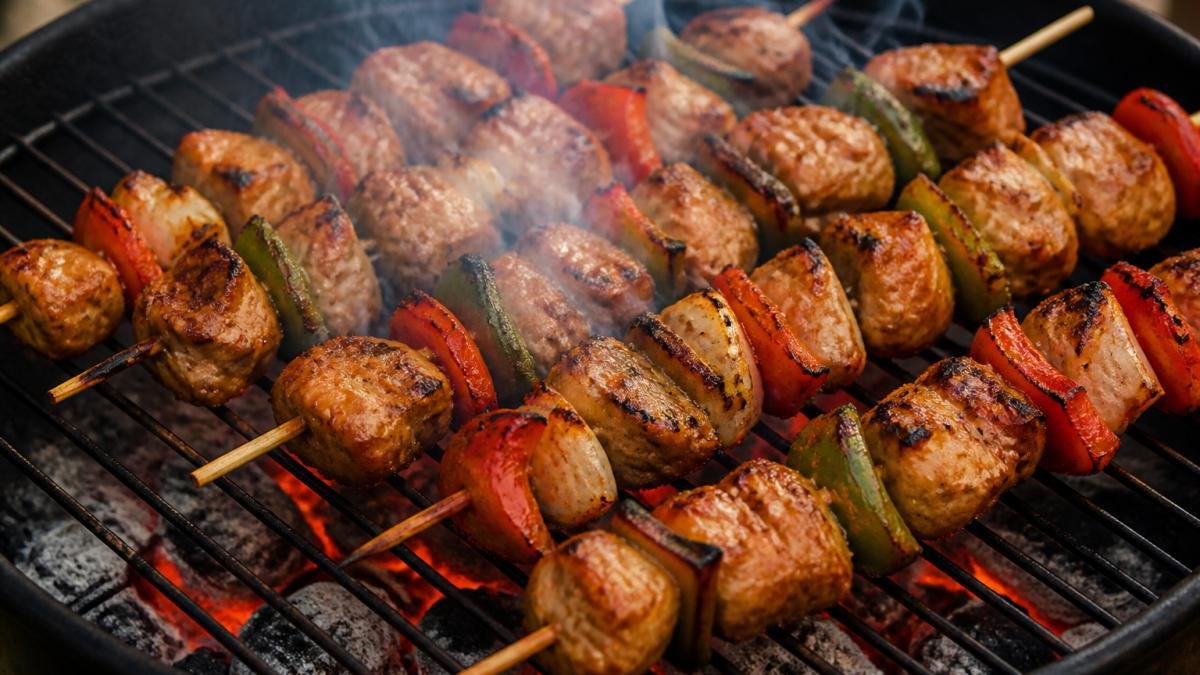
Here’s what we’d put on the grill first:
- Chicken thighs and wings: skin and fat create smoke and crisped edges
- Lamb and pork skewers: rich meat holds smoke flavour without drying out
- Souvlaki-style pork or chicken: cubes threaded on skewers cook fast and take char well
- Aubergine and peppers: their skins blister and absorb smoke beautifully
- Corn on the cob: sweet kernels against smoky char is a classic for a reason
- Halloumi and firm tofu: both hold their shape and pick up a smoky crust
- Prawns and squid: quick over high heat, smoky in seconds
Lean chicken breast and flaky fish need a gentler fire and a shorter stay. They dry out fast over roaring coals.
At Hungry Papa, our charcoal-grilled specialities lean on exactly this logic. Rich, well-marinated cuts meet live fire, and the smoke does the seasoning.
How to Get More Flavour from Charcoal Grilling
Flavour comes from control, not from piling on more charcoal. Here’s how we’d do it.
Build a two-zone fire. Push hot coals to one side and leave the other side empty. Sear over the hot zone, then move food to the cooler side to finish. You get char without burning.
Close the lid. Trapped smoke flavours the food. An open grill lets most of it escape.
Cook over the coals, not the flames. Flames burn food. Glowing coals flavour it.
Add wood chunks. A few soaked hardwood chunks on the coals deepen the smoke. Go easy, or the flavour turns harsh.
Salt early, sauce late. Salt draws moisture to the surface, which helps smoke stick. Sugar-based sauces burn, so brush them on near the end.
The single biggest flavour upgrade is patience: wait for grey, ash-covered coals before the food goes on. Rushing this step is the most common reason grilled food tastes bitter.
When Charcoal Goes Wrong: Bitter, Acrid and Ashy
Bad charcoal grilling has three signatures, and each has a cause.
Bitter usually means burnt sugars or fat. A sweet marinade or sauce hit high flame and charred. Fix it by moving food to the cooler zone and saucing at the end.
Acrid points to dirty smoke. Lighting fluid residue, unlit coals or smouldering wet wood all produce it. Use a chimney starter instead of fluid, and wait for full ignition.
Ashy comes from too much ash on the coals. Ash smothers the fire and coats the food. Give the coals a gentle tap and clear the ash before cooking.
A common mistake is closing the lid on a flare-up. That traps soot and bitter smoke around the food. Open the lid, move the food, and let the flames die down.
Conclusion
Getting real smoke flavour from charcoal takes a little patience and the right fuel. Wait for grey coals, build a two-zone fire, close the lid, and let the charcoal do the seasoning.
If you’d rather skip the setup and taste the result, Hungry Papa does the work for you. Our signature charcoal grilling, house-made signature sauces, and fresh in-house pita and tzatziki bring that live-fire flavour straight to your table. We offer dine-in, takeaway and catering across Footscray and Melbourne, with options for families, office lunches and private events.
Book a table at Hungry Papa and taste what real charcoal grilling does for flavour.
Frequently Asked Questions
Why does charcoal grilled food taste better than food cooked other ways?
Charcoal grilling combines three things that are hard to replicate: smoke from the burning fuel, a hot dry heat that browns the surface quickly, and rendered fat dripping onto the coals that vaporises back up as aroma. Together they build a savoury, smoky crust and a deeper flavour profile. Gas grills heat food but don’t produce that same smoke or fat-on-coal reaction, so the flavour stays flatter. The benefits for flavour come from the fire itself, not from seasoning alone.
How do you get the best flavour from a charcoal grill?
Start with a chimney starter and let the coals burn until they’re grey-ashed, not black, so you avoid acrid smoke. Use lump charcoal for a cleaner, woodier taste, and keep one side of the grill hot and one cooler so you can sear then finish. Salt meat ahead of time, keep the lid on to trap smoke, and don’t crowd the grill. A light brush of oil on vegetables and a pinch of salt at the end lifts the smoky notes without overpowering them.
What foods taste best when cooked over charcoal?
Foods with some fat and a firm texture take smoke best. Think lamb souvlaki, chicken thighs, pork belly, whole fish, calamari, corn on the cob, haloumi, peppers and thick-cut aubergine. Fatty cuts render onto the coals and send aroma back up, while firm vegetables hold their shape and pick up char without turning to mush. Delicate fish fillets and lean white meat dry out faster, so cook them over gentler heat or in a foil tray.
Can charcoal-grilled food taste bitter?
Yes, and it’s usually a fuel problem rather than the food. Coals that are still flaming or black with soot release acrid smoke that coats the food and leaves a bitter, ashy taste. Let coals burn down to a grey ash before cooking, use lump charcoal rather than briquettes soaked in lighter fluid, and avoid flare-ups from dripping fat by keeping a cooler zone. If a piece tastes bitter, trim the blackened crust and check your fuel next time.