Table of Contents
- Why Most Fusion Restaurants Get It Wrong
- What Is Fusion Food, and What Makes It Authentic?
- How to Evaluate a Fusion Restaurant Menu Before You Book
- Fusion Restaurant Menu Examples That Show Real Craft
- Questions to Ask a Fusion Restaurant Before You Commit
- Where to Find Authentic Fusion Restaurants Near You
- How to Find Authentic Fusion Restaurants for Groups and Catering
- Conclusion
- Frequently Asked Questions
Last Updated: October 18, 2026
Why Most Fusion Restaurants Get It Wrong
Fusion food fails when it is treated as a gimmick. A chef drops kimchi into a carbonara, adds sriracha to a moussaka, and calls it innovation. The result tastes confused, not creative. Diners notice. That is the core problem behind the question of how to find authentic fusion restaurants: the good ones respect both traditions, and the bad ones use fusion as cover for sloppy cooking.
At Hungry Papa, we cook Greek food with Asian street flavours, so we have a stake in this debate. We also have a clear opinion. Real fusion starts with mastery of two cuisines, then finds the point where they genuinely belong together. A charcoal grill is a Greek technique. A punchy house-made sauce can lean either way. When those two ideas meet on one plate and taste intentional, that is fusion worth paying for.
Below, we break down exactly how to spot the real thing before you book.
The most common mistake is judging a fusion restaurant by its most unusual dish. Novelty is easy to fake. Consistency across the whole menu is much harder, and it is the clearest sign of a kitchen that actually understands both cuisines.
What Is Fusion Food, and What Makes It Authentic?
Fusion food is a style of cooking that combines ingredients, techniques, or flavour profiles from two or more culinary traditions into a single dish. Authentic fusion happens when the chef understands each tradition deeply enough to combine them with purpose, not just novelty.
Three things separate real fusion from random mixing:
- Technique from both sides. A grill, a wok, a slow braise. Each tradition’s methods show up on the plate.
- Balance, not collision. The flavours support each other. Nothing fights for attention.
- A reason to combine. The dish has a story, not just a stunt.
Many diners find that the tell is restraint. A confident fusion kitchen uses fewer ingredients and lets each one earn its place. A weak one piles on condiments to hide the gaps.
Ask what inspired a specific dish. A chef who can explain the Greek root and the Asian twist in one breath usually cooks it with care. A vague answer about “blending cultures” is a red flag.
How to Evaluate a Fusion Restaurant Menu Before You Book
Start with the menu itself. A strong fusion menu reads like it was written by someone with a point of view. Look for a clear throughline across the dishes, not a random world tour.
Use this checklist before you commit:
- Can you name the two (or three) traditions the kitchen is actually blending?
- Do the dishes share a technique or flavour base, or is every plate a different genre?
- Are there a few signature items the kitchen clearly stands behind?
- Do the sides and sauces feel house-made, or generic?
- Are dietary needs (vegan, gluten-free, allergies) addressed clearly?
A common mistake is booking based on photos alone. Plating photographs well. Read the descriptions instead. If a menu explains where its flavours come from, that is a kitchen that thinks about its food.
For broader context on what defines fusion as a category, the Oxford Companion to Food’s entry on fusion cuisine outlines how the style developed and where the line between fusion and confusion sits.
Fusion Restaurant Menu Examples That Show Real Craft
Good fusion shows its working on the plate. Here are the kinds of dishes that signal a kitchen knows what it is doing, grouped by the craft they demonstrate.
| Dish type | What it shows | What to look for |
|---|---|---|
| Charcoal-grilled skewers | Greek grill technique, Asian marinade | Char marks, juicy meat, a sauce that lifts not drowns |
| Wrapped flatbreads | Fresh in-house pita, bold fillings | Soft bread, balanced heat, fresh herbs |
| House-made dips | Traditional base, unexpected accent | Smooth texture, a clear flavour idea |
| Grilled seafood | Simple technique, quality produce | Clean flavour, not buried in sauce |
| Handcrafted mocktails | Thoughtful pairing, not afterthought | Fresh ingredients, balance, house syrups |
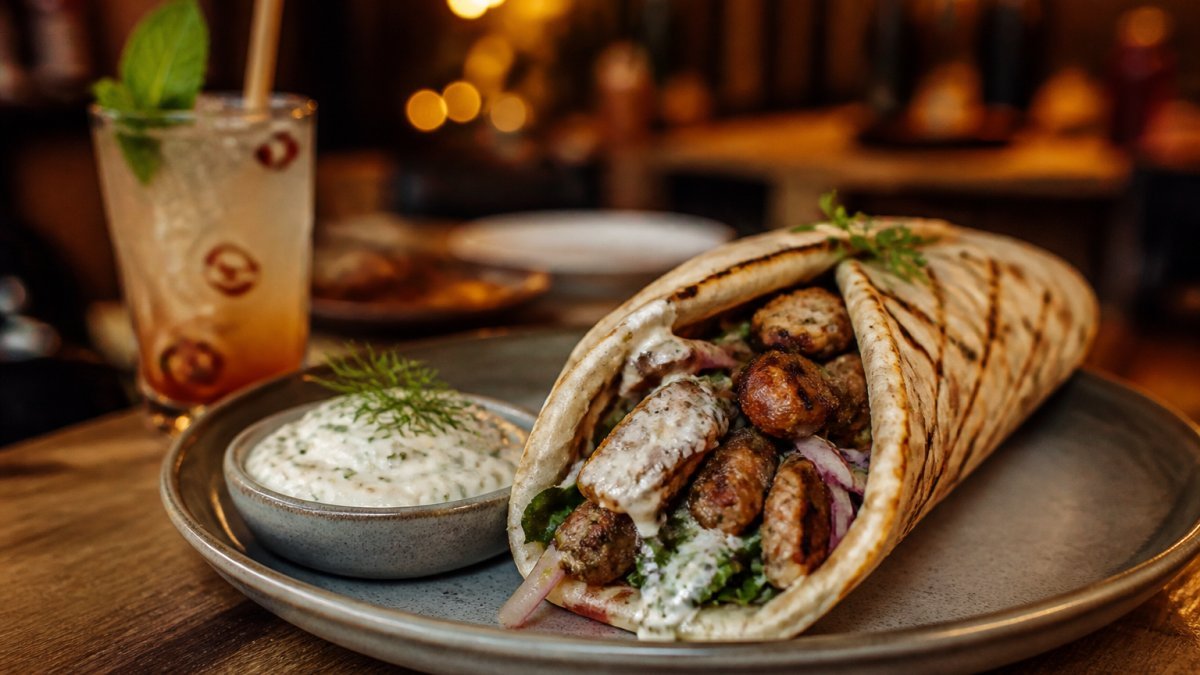
Our own menu leans on charcoal grilling, fresh in-house pita and tzatziki, and house-made signature sauces. That is not a marketing line. It is the craft standard we hold ourselves to, and it is what you should expect from any kitchen claiming to do fusion properly.
Questions to Ask a Fusion Restaurant Before You Commit
Call or message before you book. A good fusion restaurant welcomes the questions, because the answers are the whole point of what they do.
Ask these:
- Which two traditions are you blending, and why? The answer should be specific.
- What are your signature dishes? A confident kitchen names them fast.
- Are your sauces and breads made in-house? House-made signals care.
- How do you handle dietary requirements? Vegan, gluten-free and allergies should get a clear, calm answer.
- Is the menu consistent across dine-in, takeaway and catering? Quality should not drop with the format.
A vague or defensive response to any of these tells you plenty. So does enthusiasm. When a team lights up explaining a dish, that is the energy you want in the kitchen.
The single best question is “what inspired this dish?” It separates a kitchen with a point of view from one that is mixing ingredients for the sake of it.
Where to Find Authentic Fusion Restaurants Near You
Search locally, then filter hard. Generic review scores help, but they flatten the detail that matters for fusion.
Try these steps:
- Search by cuisine pairing, not just “fusion”. Specific terms surface specialist kitchens.
- Read reviews for mentions of specific dishes and consistency, not just stars.
- Check whether reviewers describe the same dishes the same way over time.
- Look at recent photos from real diners, not just the venue’s own shots.
- Ask in local food groups where people name dishes, not just venues.
For checking a venue’s food safety record before you book, the Food Standards Australia New Zealand guidance for consumers explains what registered food businesses must meet. A kitchen that takes hygiene seriously usually takes its cooking seriously too.
Verified reviews carry more weight than anonymous ratings. the Australian Competition and Consumer Commission’s guidance on online reviews sets out how review platforms and businesses should handle testimonials, which helps you judge which feedback to trust.
How to Find Authentic Fusion Restaurants for Groups and Catering
Group dining and catering raise the stakes. One bad dish is a minor annoyance for a table of two. For a function of thirty, it is the whole event.
Work through these before you commit a group booking:
- Ask for a set menu built around signatures. A kitchen confident in its craft will happily design one.
- Confirm dietary handling in writing. Vegan, gluten-free and allergy needs should be answered clearly, not vaguely.
- Check consistency at scale. Ask how the kitchen keeps quality steady for larger orders.
- Request recent catering references. Past events tell you more than a brochure.
- Taste before you commit. A small trial order is the cheapest insurance you can buy.
This is where we put real weight on our catering and group options. We offer dine-in, takeaway and catering, and we build group menus around the dishes we are known for. Our Google reviews on Trustindex reflect the standard we aim for. That is the experience we want every group booking to match.
For a corporate lunch or family celebration, book a tasting first. It costs far less than a ruined event and tells you exactly how the kitchen performs under a real order.
Conclusion
Finding authentic fusion restaurants comes down to one skill: telling craft from gimmick. Read the menu for a point of view, ask questions that reveal how the kitchen thinks, and judge consistency over novelty.
At Hungry Papa, we blend Greek tradition with Asian street flavours through charcoal grilling, house-made sauces, fresh in-house pita and tzatziki, and handcrafted mocktails. If that sounds like the fusion experience you have been looking for, book a table and taste the difference for yourself.
Frequently Asked Questions
What makes a fusion restaurant authentic?
Authenticity in fusion comes down to whether the chef genuinely understands both traditions before combining them. Look for cooks who can explain where each element comes from, menus that name their source cuisines clearly, and dishes where the pairing has a reason behind it. A charcoal-grilled souvlaki with an Asian-style marinade works because the grill and the marinade each do a job. Random topping combinations rarely survive a second visit. Reviews that mention consistency across repeat orders are a stronger signal than a single glowing write-up.
How can you tell whether a fusion menu is thoughtfully created?
A thoughtful fusion restaurant menu is short and specific rather than sprawling. Check whether dishes share a cooking method or a pantry, and whether sauces are made in-house. Ask staff which dish best represents the kitchen and listen for a real answer. Menus that list twenty cuisines usually spread the kitchen too thin. When you evaluate a fusion restaurant menu, favour places that do a handful of things repeatedly well over places that try everything at once.
What questions should you ask before booking a fusion restaurant?
Ask which cuisines the kitchen is blending and why, which dishes are signatures, and how dietary requirements are handled.
How can you find fusion restaurants with high-quality ingredients?
Start with the menu language. Specific descriptions, such as naming a cut of meat, a cheese or a chilli variety, suggest the kitchen knows its supply. Look for evidence of in-house preparation: breads baked on site, sauces and dips made from scratch, and marinades that take time. Reviews mentioning fresh ingredients and quality carry weight, especially repeat customers. Photos of actual dishes help too. If a venue publishes real customer reviews and images of its food, you can judge presentation and portioning before you book.